

”Movement is unpremeditated being; it is the uncritical expression of life. As we begin to meditate we begin to stop living. . . First comes life; and if we meditate prematurely, if we lend to physical things a critical self-consciousness, we are substituting imagination for movement and sentimentalizing the physical past. Up to a certain point we must leave things alone and let them speak for themselves, in movement. We must understand the physical physically.”( Len Lye, Laura Riding, Epilogue, 1938 )
Its all in the kinetics. Len Lye’s idea of tangible motion sculpture brought to life images that celebrate motion. Driven by his passion to make movement real, Lye ( 1901-1980 ) created kinetic sculptures. There was a persistence of the human figure in his work regardless of medium. He set himself against representations of imagery and for a deep and profound study of the figures of motion.

Len Lye
He was at the far end of the learning curve, and never fit easy categorization of historic branding labels.Throughout his varied and prolific artistic career, Lye moved on the periphery of many twentieth century artistic movements- including the Surrealists, the Constructivists, and Abstract Expressionism, though never comfortably fits into any of these stylistic categories. However, he was close with poets Dylan Thomas, Robert Graves, and W. H. Auden, as well as artists Miró, and Georgia O’Keefe. The surrealist influence When, later, he began to draw his own pseudo-tribal images, that mystery, that lost or buried meaning, became a thing of his own and exposure was crucial though, in his pursuit of motion, he developed a recognition of its ”look” in all its complexity, and, given the influence of Surrealism, the step to locating the mystery fully within himself was a short one.

Lye, Ribbon Snake, 1965;reconstitution 2008
Its not over t’il its over, but, the art gamesman’s dream of educating the masses to appreciate the precious object sort of art will eventually have to be abandoned, along with the traditional art galleries, to a handful of square eggheads. Len Lye showd what sort of art it will be. And this art will not be anything like the bulk of what passes for avant-garde art today. Hopefully, to the chagrin of us in the art supplies business, the brush and paint tradition will may have finally played itself out, as the last tube is left to dry and decompose on the beach, like rotted fish washed up on the shore. Into the oblivion with it will have gone the rubbish collages, the old iron sculptures of imitation Tinguely’s, phony drip paintings of ersatz Pollocks, squashed motorcars of John Chamberlain, imitation giant baked potato and hamburger jokes of Claes Oldenberg, ad nausea, give me a Gravol, the indigestion of stale art smells like an old tuna fish sandwich.
The reactionary cult-of-the-precious-object-in-a gilt-frame complex is the foundation of the art game. An artist St-George slaying and burying the art beast, at the bottom of a museum pit for a 1000 years has not happened yet, despite the efforts of some valiant art knights and chevaliers like Dennis Oppenheim, Len Lye, Alexander Healy, Alexander Calder, Donald Judd and their more contemporary cadets like Dragset and Elmgreen.

” One morning, it had been raining all night, and there were these marvellous fast little scuddy clouds in the blue sky. As I was looking at those clouds I was thinking, wasn’t it Constable…who sketched clouds trying to convey their motions? Well, I thought, why clouds, why not just motion? Why pretend they are moving, and why not just move something? All of a sudden it hit me-if there was such a thing as composing music, there could be such a thing as composing motion. After all, there are melodic figures, why can’t there be figures of motion? ”…an idea hit me that it seemed like a complete revelation. It was to compose motion, just as musicians compose sound. [The idea] was to lead me far, far away from wanting to excel in…traditional art ( Len Lye )

Len Lye, Film from Still Rainbow Dance, 1936
The beloved old men. : Picasso, Ernst, Miro etc. are like Joel and Ethan Coen’s, ” No Country For Old Men”, where the themes of fate and circumstance pushed the two millions dollars of illcit money in a satchel on them, and the stash in the satchel syndrome keeps changing hands and growing bigger as it becomes exchanged over time. That is to say, there is a certain amount of fraud involved in continuing to chase after the satchel when the game has gone elsewhere. The Sherrif’s have moved on. The inherent difficulty of expression of motion through paint on a canvas can only be bypassed through real motion, whose origins are deeply rooted and perhaps only understood by First Nation societies. Picasso realized the futility of painting imitation wood and newspapers through paint in their still lifes, and thus pioneered the elaborate arts of ccollage and constructivism. The desire for motion in art goes much deeper than publicity garnering gimmicks, though they may point the way to more serious studies.
Len Lye went on to create a vast array of art, pioneering forms of film making and kinetic sculptures. He also was a reputable painter, writer and theorist. A lot of his inspiration came from his personal studies of the New Zealand Maori, Samoans,head hunters of the Solomon Islands, and Australian aboriginal; and his belief that the best art is inspired by the unconscious or the ‘old brain’.He was expelled by the New Zealand colonial administration for living with an indigenous community.Yet, the lost or buried meaning of tribal objects, the scratching of myth and meaning, was internalized and ready to return to the old brain.
He worked as an anthropologist, locating the mystery, and regarded the process as an unpremeditated act of mind. This notation, or documentation involved a form of ”doodlng” involving kinds of attention meant to catch consciousness napping so that the mind can freely take its shapes. Shapes which constitute knowledge of what one is at the exact moment one is. and Lye spent most of his life dedicated to his idea of ‘making movement real’ or ‘ Tangible Motion Sculpture’ as he called it, reflecting what Allen Ginsberg expressed when he said, ”mind is shapely”.
” Living in London in the 1930s, Lye became well known for his pioneering work in ‘direct’ or camera-less filmmaking in which the soul is the camera which uses the artists hands for execution of the image. To produce abstract animation Lye painted and scratched the film itself, and used innovative techniques of colour processing called Colour Cry and also matched dramatic music, of indigenous origin to capture what he termed the energy of movement. Lye emigrated to the United States in 1944, settling in New York where he continued his work in film and began producing kinetic sculptures.” Lye was one of the first to use technology in art and used his creative intelligence and imagination to produce inventive and desirable objects, environments and atmospheres. He used film as a canvas, by painting abstract visual patterns on the film in the 1930′s and in the early 1940′s, using black film stock, he scratched designs into the emulsion creating, flashing, fluid patterns invoking compositional movement in pieces such as ”Free Radicals”
”Lye showed his films at The Club and was pleased to claim, and rightly, the kinship of his own paintings of the 1930s with the New American painting of the 1940s and ’30s. On the other hand, the European kinetic movement was conceived in repudiation of this Abstract Expressionism, or Tachisme as they called it. Lye’s work has been described as Constructivist. Yet when Naum Gabo, a founder of Constructivism and a prophet of kineticism, arrived in London – that was also when Lye’s friend Ben Nicholson opted for geometric abstraction – Lye moved into closer orbit with the Surrealists. The kineticists have made a point of sinking their individuality into groups, such as GRAV and GROUP T, whereas Lye was pleased to call himself a ‘maverick’s maverick.’ Gianni Columbo, a member of GROUP T, has spoken of the transformation of the observer, from a spectator to a technician. ‘This transformation, on as wide a scale as possible. . . is one of the objectives to which our work consistently aspires.’ (1965) Len Lye, on the other hand, was pleased to say he had never learnt to drive a car. ‘Personally I have no aptitude for mechanics, no knowledge of motors, relay systems, or servo devices. Perhaps I’m for magic carpets over flying saucers, and would rather be an heir to the Australian aboriginal with his boomerang and bullroarer than an heir to constructivism and mechanics.’ (1965) Lye appears to be an odd man out, his co-incidence with European kineticism but an accident of art history. ( Roger Horrocks )

Len Lye, Colorbox, 1935, painting on film
”I myself eventually came to look at the way things moved mainly to try to feel movement and only feel it. This is what dancers do, but instead I wanted to put the feeling of a figure of motion outside of myself to see what I’d got. I came to realise that this feeling had to come out of myself; not out of streams, swaying grasses, soaring birds; so instead of sketching lines and accents described by things in motion, I now tried to tie and plait their particular motion characteristics into my sinews – to attach an inner echo of them to my bones.
Len Lye, The Practice, from The Art That Moves, unpublished MSS, 1964.
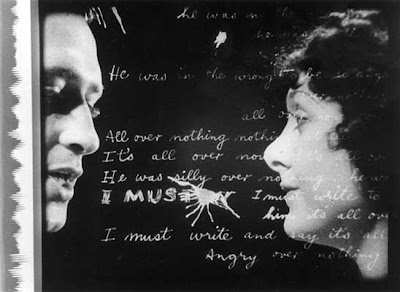
Lye, N or N.W. ( 1937) film for British Post Office



 COMMENTS


A lot of useful information. Thank you!