
The consequences of John Maynard Keynes.He conceived the economic machinery that runs our lives. His brilliant engine, despite overhauls and tune-ups continues to run erratically. Is it the driver or the roads?…
Keynes identified the economic importance of animal spirits. Making and losing fortunes in the financial markets led him to refer to the “casino capitalism” of the stockmarket. He also noted that “there is nothing so dangerous as the pursuit of a rational investment policy in an irrational world”. He had an amusingly accurate view of the impact and transmission of economic ideas: “Practical men, who believe themselves to be quite exempt from any intellectual influences, are usually the slaves of some defunct economist.” As for the frequency with which his opinions would evolve: “When the facts change, I change my mind – what do you do, sir?” “In the long run we are all dead,” he said. For him, the long run was 1946.

---He hardly seemed cut out to be a workingman’s revolutionary. A Cambridge University don with a flair for making money, a graduate of England’s exclusive Eton prep school, a collector of modem art, the darling of Virginia Woolf and her intellectually avant-garde Bloomsbury Group, the chairman of a life-insurance company, later a director of the Bank of England, married to a ballerina, John Maynard Keynes -- tall, charming and selfconfident -- nonetheless transformed the dismal science into a revolutionary engine of social progress.---
“So the Fed is again in the position of “pushing on a string” and finding that nothing happens. Some economists describe this as a “liquidity trap.” Money creation loses its stimulative power — vastly overrated even in ordinary times — because public demand for loans is weak. Americans are too strapped financially, too short on investment opportunities, or too concerned about the future to borrow. They prefer to save instead.
Some economists argue that “trap” is an inappropriate description. The new money the Fed has pumped into the economy to replace the financial-sector liquidity wiped out by the collapse of the bubble has to go somewhere, they point out. It has to end up in someone’s bank account and banks have to quickly convert deposits (liabilities) into investments or go broke even faster than some have by loading up on polluted, mortgage-backed securities. Maybe “liquidity malfunction” is a better term than “trap.” ( George Melloan WSJ)

Robert B. Reich: The young Keynes held his tongue as Woodrow Wilson, David Lloyd George and Georges Clemenceau imposed vindictive war reparations on Germany. But he let out a roar when he returned to England, immediately writing a short book, The Economic Consequences of the Peace. The Germans, he wrote acerbically, could not possibly pay what the victors were demanding. Calling Wilson a “blind, deaf Don Quixote" and Clemenceau a xenophobe with “ one illusion -- France, and one disillusion - mankind” (and only at the last moment scratching the purple prose he had reserved for Lloyd George: “this goat-footed bard, this half-human visitor to our age from the hag-ridden magic and enchanted woods of Celtic antiquity”), an outraged Keynes prophesied that the reparations would keep Germany impoverished and ultimately threaten all Europe.
Almost everyone who knew Maynard Keynes remembered him as just about the smartest man in England. Lytton Strachey once remarked that ” his common sense was enough to freeze a volcano” Leonard Woolf, Bloomsbury’s judicious liberal conscience , said that Keynes had “absolutely the quickest brain of any man I’ve ever met, except perhaps Bertrand Russel’s.” But Russell himself admitted that he seldom emerged from an argument with Keynes without feeling something of a fool. Keynes loyal biographer, Sir Roy Harrod said, ” No one in our age was cleverer than Keynes, nor made any less attempt to conceal it.”
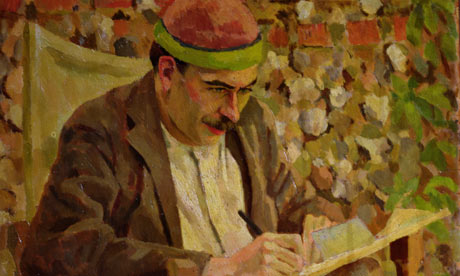
Roger Fry portrait of Keynes."But it is the rounded man I admire most: a member of the Bloomsbury set, he managed to outrage them all – including former lovers (male) – by marrying Lydia Lopokova, a star of Diaghilev's Ballets Russes. He loved the arts and did loads to help them, creating the Arts Council of Great Britain, and seeing to the financial wellbeing of Sadler's Wells, the Royal Opera House and King's College, Cambridge. He made money as a speculator and used it to buy paintings – Cézanne, Braque, Picasso. All this and he managed to be nice, too – witty and always warm hearted. His arch enemy Hayek called him "the only really great man I ever knew." We need more like him.-Joan Bakewell
Inside this intellectual dandy was a genius crying to get out. When it finally did, in the depths of the depression, Keynes brilliant intelligence devised a technique for steering capitalism off the rocks on which it was then stuck fast. He demonstrated beyond a doubt that the forces of the free market would not automatically bring prosperity if allowed to work themselves into balance in the long run. ” Adam Smith’s “invisible hand” was simply not there to moderate mankind’s self-interest.
Keyne’s classifications of aggregate income and expenditure, savings and investment, are as basic to modern thought as Freud’s discovery of the emotional forces by which we are individually driven. In both cases, the problem is not in the discovery, or an articulation of the awareness, but rather the interpretations thereof, that has proven to be the sticky wicket. The discovery of what was essentially a neutral fact: that there was no God in the economic machine; had an impact as forceful as the awesome discoveries of the atomic scientists.
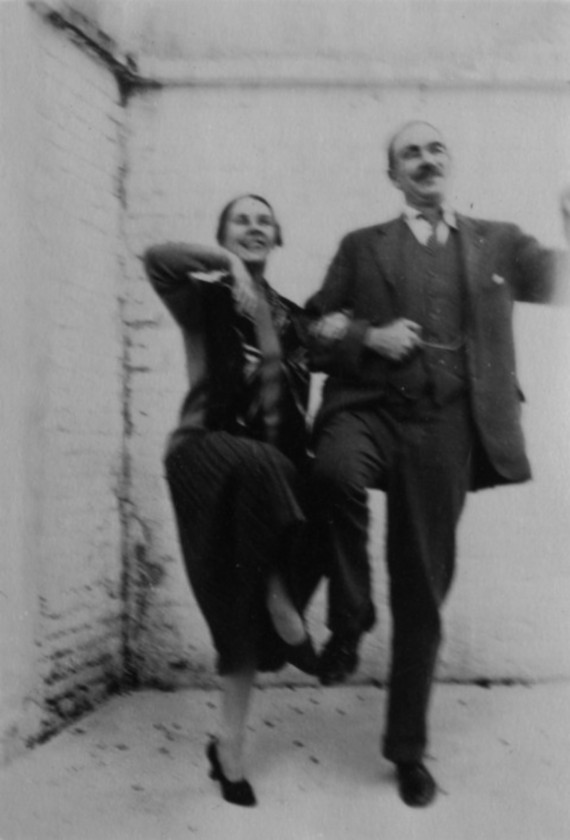
Michael Arditti:With the exception of Arthur Miller and Marilyn Monroe, there can have been no odder celebrity couple than Lydia Lopokova and John Maynard Keynes. She was a prima ballerina who delighted audiences with her delicacy, exuberance and charm. He was a renowned economist whose intellect made even Bertrand
ell feel inadequate, and a committed homosexual along with his friend Lytton Strachey.The scientists showed man that it was possible to harness the raw energy that runs the physical universe; Keynes showed him that it was possible to regulate and offset the greed that drives the capitalist world, or at least in theory.It may have been a case of the road of good intentions; attempts to purge the system of its barbarism creating a secondary market for financial scandals and fraud in its myriad forms. Keynes overturned Victorian economic morality at a stroke: “The engine which drives Enterprise is not Thrift, but Profit”. These discoveries about ourselves and our environment, whether emotional, physical, or material, share one mesage: if man will be master of his fate, he must seize the power to control it.
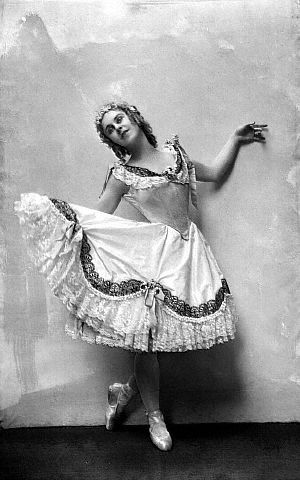
Michael Arditti:After unwittingly contracting a bigamist marriage to Diaghilev's business manager, she returned to wartorn Europe and enjoyed two of her greatest successes in Massine's The Good-Humoured Ladies and Parade, although the latter so enraged conservative critics that they demanded its creators, among them Picasso, Cocteau and Satie, be sent to the trenches. The company then moved to London, where Lydia met Keynes, whose first impressions of her were not favourable. He complained to his former lover, Duncan Grant, that 'she's a rotten dancer — she has such a stiff bottom.' Three years later, such cavils were forgotten when, enchanted by her exotic presence, eccentric speech and engaging company, he fell in love. Unlike Grant, who fathered Vanessa Bell's child while regarding women as no more than serviceable receptacles for his sexual energies, Keynes experienced a true change of heart. Read more: http://www.dailymail.co.uk/home
But Keynes, like the atomic scientists, was never quite at home with this brute fact of power. Politics, he said, is ” a fairly adequate substitute for bridge.” The clever Whig aristocrat, the gray eminence to two wartime governments, the patron of the arts, the prolific pamphleteer, the academic economist who outguessed the markets and made a fortune as a speculator, composed a life that was truly Mozartean in its grace, elegance and success. But like Mozart and the Mysterious Stranger, Keynes at last came face to face wit the irrational power of the self-perpetuating modern superstate, and his weak heart collapsed. perhaps at he shock of how his own theories, like those of Smith before him, and David Ricardo, could be used to create financial weapons of mass destruction.
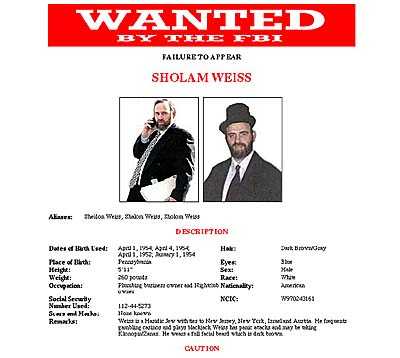
---Weiss, 55, from New York, got an 845-year sentence from a Florida federal judge in 2000, plus nearly $300 million of fines and restitution, after being convicted on 78 counts of racketeering, wire fraud and money laundering in the $450 million collapse of National Heritage Life Insurance. Weiss had gone on the lam before sentencing and was apprehended in Austria a year later. He is currently held at a federal facility outside Scranton, Pa., and his release date is Nov. 23, 2754. Weiss' co-defendant, Keith Pound, was sentenced by the same judge to 740 years after being convicted on 76 counts. Pound, a former mortgage broker, was 47 when sentenced. He died in prison at 51.---Forbes
The diversity of scams is mind boggling. Could Keynes have foreseen swindles that looked as complex as Swiss timepieces? schemes that tick through layers of stock promoters, short sellers, day traders and money launderers. Or Ponzi operations that grow exponentially during economic bubbles? Each fraud seems to have its own secret sauce for outperforming the market be it currency trading, arbitrage or Madoff’s special ingredient ” split-strike conversion.” Vulture capitalists and short sellers are all manifestations of the “irrational exuberance” that perpetuate a desire for the business cycle . Its the law of unintended consequences whose “unseen hand” is typically connected to the sleazy back alleys of markets.
a


 COMMENTS
I think are not Lord Keynes`s ideas which are dominating the world nowadays, but Milton Friedman`s from Chicago University; the Consensus of Washington took his ideas, guess,
on how the excess of wealth made through privatizations of all richness in the world, would spill as champagne from the glass to the lower classes; they managed to convince some, others were profitting of the game.
Lord Keynes idea about full employment would lead to peace; full employment all over the world, I say, for maybe he was only thinking on Europe and USA. Capitalism needs to diminish itself to be able to grow again, I think, just as China diminished Comunism.
Its complex issue. Like Adam Smith before him, the manifestation and the theory suffers from a perversion. It seems to come back again to the power of these large corporations ability to influence policy.